
MON 29 JUN - Soldiers from Sudan’s Rapid Support Forces (RSF) are being trained to use weapons supplied by the United Arab Emirates at camps across Libya, according to investigators.
The findings are set out in a new report published jointly by Lighthouse Reports, Evident, and Sudan War Monitor and in a short documentary titled Inside the Secret Network Fueling Sudan's War.
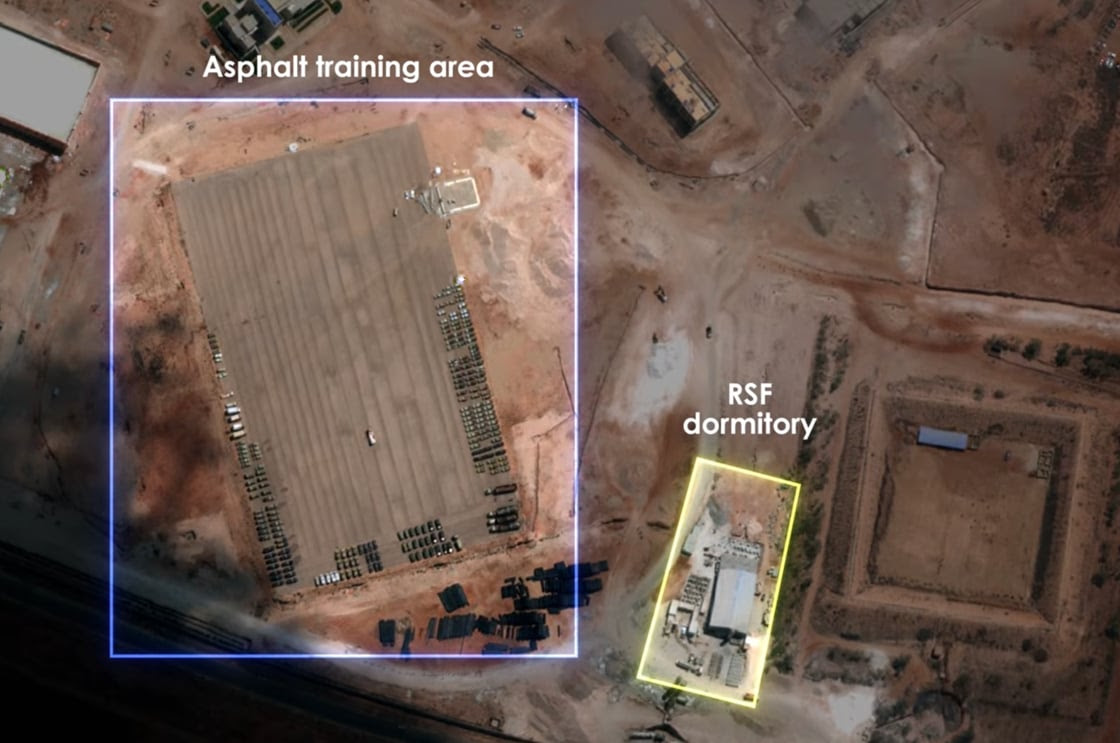
The investigation used testimonies, satellite images, and open source footage to map a “sprawling network” of staging sites, weapons flows, and camps where RSF defectors say they were trained by the Libyan National Army (LNA) and UAE-contracted Colombian mercenaries.
It follows longstanding denials by the RSF that it is conducting training outside of Sudan and by the UAE that it is providing support to the RSF.
Speaking at a press briefing on Monday, Julia Steers, lead investigator at Lighthouse, said the camps remained "as active as ever", contrary to briefings by LNA sources that they were being shut down, and that the investigation had found four sites never previously identified.
A full recording of the press briefing is available to watch here
"The narrative was that… the training camps had been shut down, and we found completely the opposite,” she said. “They had just rerouted some flights and some of the desert driving routes into Sudan.”
Appearing in the documentary, an RSF defector - one of eight interviewed - said he spent three months at a camp near Benghazi learning how to use heavy weaponry, adding that many of those trained at the camp returned to Sudan to train other members of the RSF.
Asked where the weaponry came from, he said: “It’s all Emirati. They would bring it from their country by a plane to here [Libya]. We would receive them and deliver them to Sudan.
“The plane coming showed it was Emirati.”
.jpg)
He said most ammunition boxes, weapons, and vehicles did not have branding to indicate that they were from the UAE, but that one armoured car did.
“You could see ‘Made in Emirates’,” he said.
Steers said the camp "revealed the extent of [the RSF's] collaboration with the LNA and their collaboration with the UAE".
The release of the investigation coincided with the referral of numerous high-level foreign officials to the International Criminal Court (ICC) for aiding and abetting atrocity crimes in Sudan’s Darfur region, including war crimes, crimes against humanity, and genocide.
The submission - made by the Raoul Wallenberg Centre for Human Rights (RWCHR) and a coalition of other organisations - targeted backers of both sides of the conflict and aimed to expose foreign involvement in the supply of arms, mercenaries, equipment, logistical support, and financing.
Yonah Diamond, Senior Legal Counsel at RWCHR, told the briefing that “all international observers recognise that none of the violence or destruction in Sudan is happening in a vacuum”.
"They are sustained by an external network of actors and arms suppliers,” he said.
He added that the submission “meticulously linked the movement of arms, drones, mercenaries, and logistical support with a substantial and direct impact on the commission of atrocity crimes”.
“This is not only essential for complementing and enforcing the arms embargo on Darfur and working towards limiting violence in a way that targets the atrocities at the source,” he said.
“It’s also a test for the ICC to live up to its founding mandate of not only ending impunity for these atrocity crimes, but for preventing and mitigating and having the greatest impact on the most consequential drivers of these atrocities."
It also comes amid growing concern about the humanitarian situation and danger to civilians developing in North Kordofan capital El Obeid.
The city, which sits in the centre of Sudan and is a major commercial and logistical hub, is currently controlled by the Sudanese Armed Forces (SAF) but is largely surrounded by territory controlled by the RSF and the allied Sudan People’s Liberation Movement-North (SPLM-N).
A long-running attempt to bring the city under siege has seen frequent shelling and drone strikes over much of the last year, while fighting in the surrounding region has seen thousands of civilians displaced.
A recent uptick in strikes, particularly on energy infrastructure, and mounting reinforcements in the area have prompted fears that the RSF is planning a major assault on the city, while the UN and Western governments have warned of the potential for mass atrocities of the sort seen after the fall of El Fasher last year.
The weekly dispatch features the latest developments, first-hand testimony, footage, photos, stats and analysis on Sudan. We can connect you with voices from the ground, experts, and survivors of the war. Get in touch on +44 7514 796 678 or sudan@avaaz.org.
To get this briefing in your inbox each week, sign up here.
Deploying a civilian protection mission offers the most direct path to protecting civilians and stemming atrocities in Sudan, according to a paper published Tuesday.

More than 21,000 people have been displaced by renewed fighting in Blue Nile state, according to reports, with both sides believed to be sending additional forces to the region and aid workers warning of a “catastrophic” impact for civilians.


Avaaz Foundation
110 Golden Lane | London, England, EC1Y 0TG
1330 6th Avenue, Suite 23A | New York, NY 10019, USA



.svg)


