THU 22 OCT - Civilians returning to El Fasher a year after its capture by the Rapid Support Forces (RSF) still risk assault, rape, and forced disappearance, according to sources speaking to Avaaz, including one woman who has recently made the journey.
The RSF, which is widely reported to be receiving support from the UAE, took control of the city on 26 October last year after an 18-month siege, and over the following days carried out a massacre against the civilian population in which thousands are believed to have been killed.
An estimated 260,000 people were inside the city at the time, many of whom fled to the nearby Tawila displacement camp or one of the remote villages in the region around the city.
Since taking over El Fasher, the RSF – which has declared a parallel government for Sudan – has encouraged civilians to return, publishing videos purportedly showing people coming back to their homes, taking part in clean-up operations, and greeting RSF soldiers on security operations.
But Hala*, a woman who fled to Tawila on the day the city fell and returned earlier this month to collect some belongings, told Avaaz that “there is no security in El Fasher at all”.
“Everything has changed,” she said. “Houses have been looted and destroyed because of the war and shelling. All the streets looked completely different. Women face sexual violence, and anyone who refuses the RSF's demands can be tortured or beaten.”
She said that, on arriving in El Fasher, she was interrogated about why she was there and made to disclose the exact location of her home before being issued with an entry permit.
The following day, RSF soldiers saw her in the street and “started speaking to me using abusive and insulting language”.
“Dealing with them is very difficult,” she said. “They can easily enter your house and threaten to rape you if you refuse to go with them. They might rape you [anyway] if you refuse, beat you, and if you argue with them, you could end up in prison.
“There were other civilians in the street, so they did not physically assault me and eventually allowed me to return home.
“The strangest thing is that they might assault you and then tell you that El Fasher belongs to you, that this is your home, and that you are welcome to return at any time.
“I will never go back to El Fasher again, even if the situation improves.”
A UN report earlier this year found that the RSF’s mass killings and sexual violence against non-Arab communities in El Fasher, particularly the Zaghawa and the Fur, bore the "hallmarks of genocide".
Despite global outrage over the killings, the UAE continues to back the RSF through covert arms shipments, logistical networks, and foreign mercenaries, though officially denies providing the support.
Many of the people still inside El Fasher by the end of the siege had already fled previous RSF attacks, like that on the nearby Zamzam camp a few months before. The subsequent displacement saw the population of Tawila swell from around 240,000 in March 2025 to at least 650,000 following the fall of El Fasher.
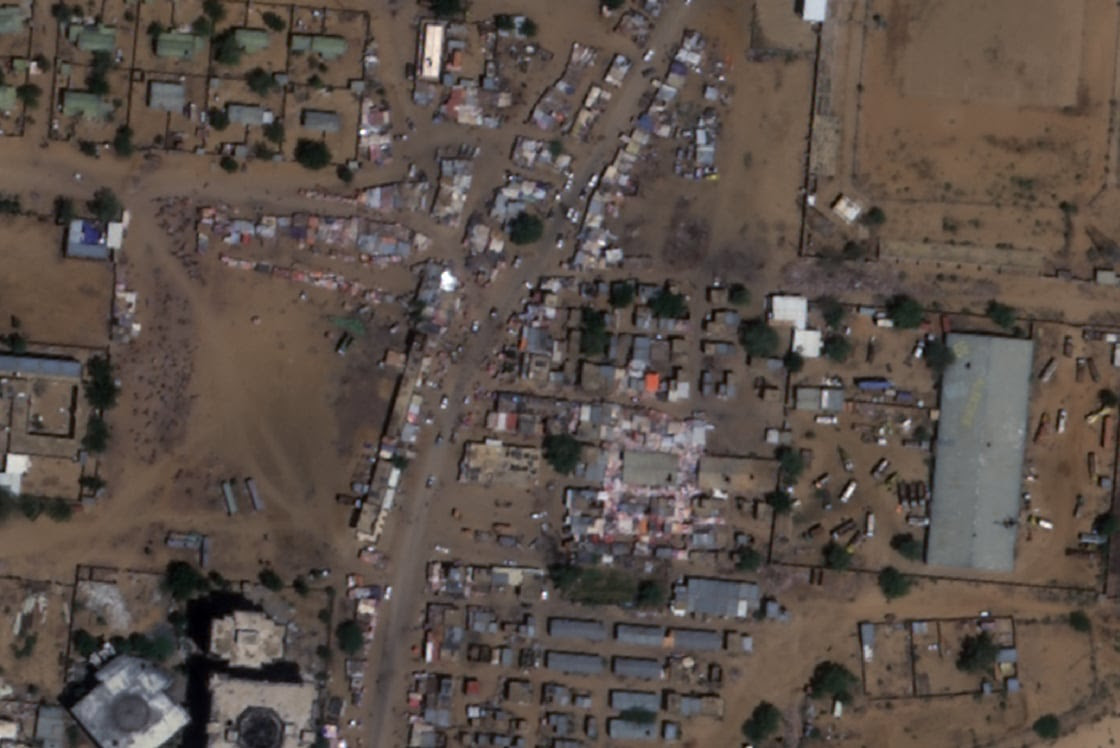
Satellite imagery taken over El Fasher on 12 October shows a group of structures at a former food market in the west of the city - one of the last areas to fall to the RSF - that has grown in size over the last year.
The structures suggest a possible ongoing civilian presence, although it is unclear whether they are part of a makeshift market, tents, or something else.
Hala said videos showing peaceful scenes in the city or soldiers interacting with civilians were “staged” and that the only people still living there were those with no other options.
“They are mostly those who fled to nearby villages when the city fell and later returned,” she said. “They came back because they were afraid of the abuses happening along the roads and the violence they might face [if they tried to go to Tawila or further afield]. They also did not have money for transportation.
“Some families had elderly relatives who could not walk all the way from El Fasher to Tawila. They had no other choice but to live with the situation in El Fasher. Their homes were destroyed, so they are now staying together in shelters.
“Sometimes RSF members go to villages around El Fasher themselves, bring people into the city, distribute aid to them, and film the distribution.”
‘We need protection’
A year since the RSF took control of El Fasher, many of the remnants of the siege and ensuing massacres remain, despite the group’s claim to be establishing a rival parallel government and functioning state.
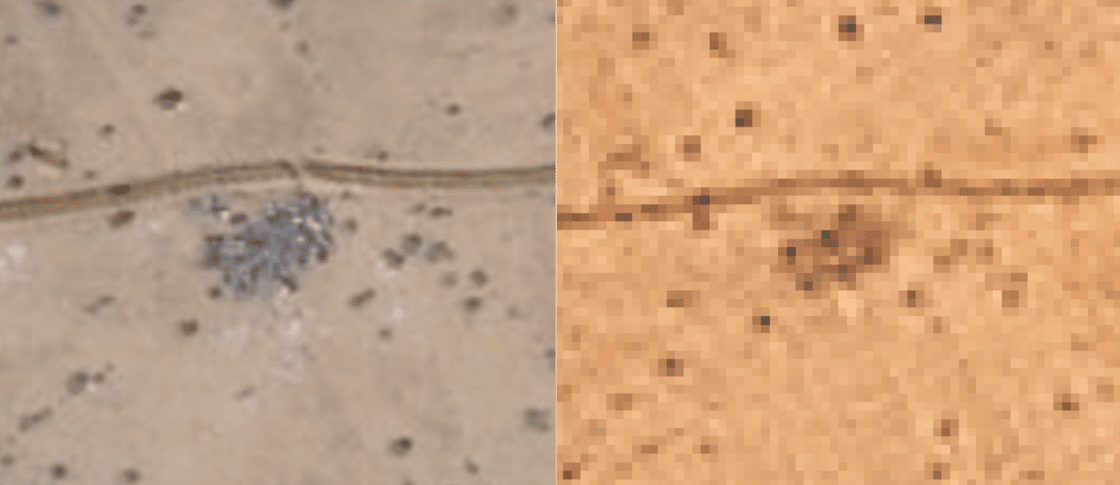
Further satellite imagery taken on Tuesday showed a cluster of objects believed to be burned-out vehicles still present close to the earthen berm built around the city by the RSF in the final months of the siege.
The wreckage first appeared in the days following the RSF takeover, when open source footage from the berm showed burning vehicles and people in civilian clothing being summarily executed after being intercepted while trying to cross.
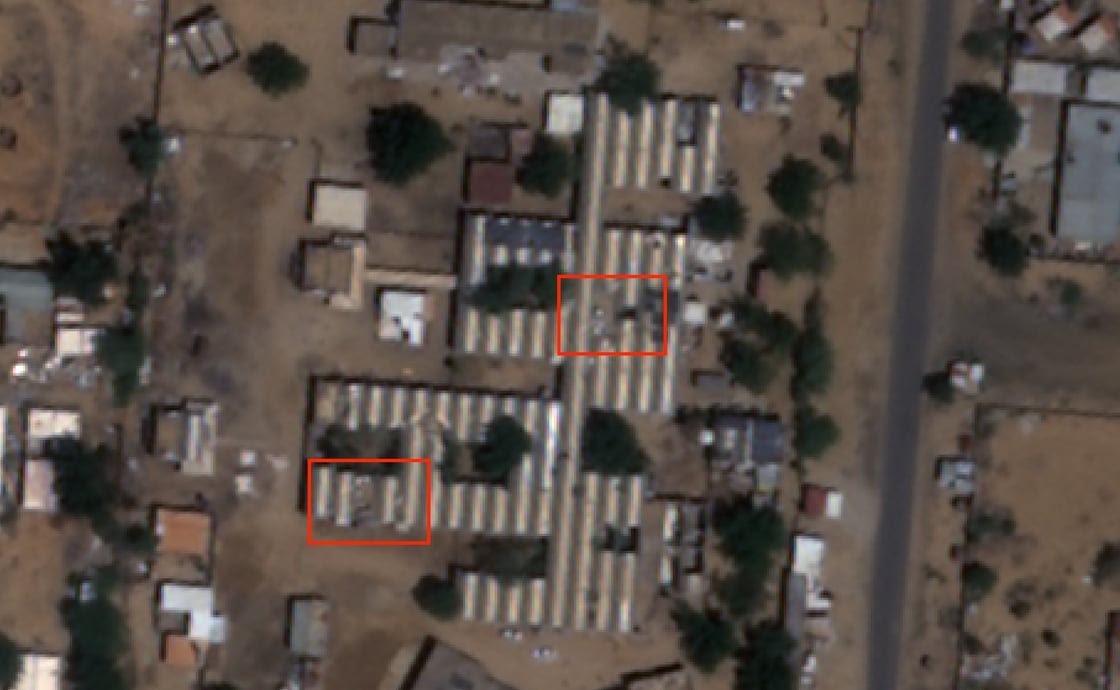
Imagery from 12 October showed sections of collapsed roof likely to have been caused by shelling still visible at the Saudi Hospital. The site was the last medical facility still functioning in the months before El Fasher fell, and Hala and other sources said it is now partly operational again.
Amna, an aid worker who left El Fasher in the days before it fell and now runs a women’s initiative in Tawila, told Avaaz that the camp was still receiving people from the villages around El Fasher, spurred by a poor agricultural season and the lack of basic services.
“Even in Tawila there are almost no basic services, especially when it comes to food, medicine, and shelter,” she said.
“The people here have either lost someone during the fighting in El Fasher, lost a family member while fleeing to Tawila, or have relatives who are missing or forcibly detained [by the RSF].
“There are many children in Tawila who are separated from their families, with no information about where their parents are. They cannot return to El Fasher on their own because El Fasher is now a ghost city.”
Amna said there had been cases of women and girls who went out to collect firewood to cook for their children or siblings and never came back.
“There are many cases of missing people and disappearances, and we don't know exactly who is responsible,” she said.
“We need protection. We need protection from anyone carrying weapons, whether they are RSF fighters or armed men from [the Sudan Liberation Army-Abdul Wahid (SLA-AW), which controls the territory around Tawila].
“We currently depend on community initiatives for food and water. We walk long distances to get clean water. Fevers and illnesses are very common.
“One year after the fall of El Fasher, our situation is worse, and our lives are more difficult. Returning to El Fasher is risky, so people are trying to settle in Tawila until a miracle happens and our situation improves.”
The weekly dispatch features the latest developments, first-hand testimony, footage, photos, stats and analysis on Sudan. We can connect you with voices from the ground, experts, and survivors of the war. Get in touch on +44 7514 796 678 or sudan@avaaz.org.
To get this briefing in your inbox each week, sign up here.
At least 15 people have reportedly been killed by strikes in West Kordofan amid an offensive that has seen the Sudanese Armed Forces (SAF) gain territory in the state for the first time in almost a year.

Food, water, and fuel shortages are pushing Blue Nile into a “humanitarian crisis”, aid workers have told Avaaz, amid an escalation in fighting that has displaced more than 20,000 people.


Avaaz Foundation
110 Golden Lane | London, England, EC1Y 0TG
1330 6th Avenue, Suite 23A | New York, NY 10019, USA