
FRI 20 JUN -- Civilians displaced by the war in Sudan have described finding their houses looted and without power, while the number of returnees continues to rise. One man, Ahmed, told Avaaz he had gone back to his home in Omdurman but that “nothing was left” and that life in parts of the city was “nearly nonexistent”.
Figures published last week by the UN’s Displacement Tracking Matrix (DTM) said an estimated 164,110 people have crossed back into Sudan from Egypt so far this year, almost four times the recorded total for 2024.
Egypt is the largest host of refugees from Sudan, with at least 1.5 million people having crossed the border since April 2023. DTM said that, if current trends continue, “hundreds of thousands of individuals may return to Sudan from Egypt this year, depending on conflict dynamics”.
The first five months of this year also saw around 1.2 million of the 11.6 million people displaced within Sudan return home.
The rise follows the recapture of Khartoum city from the Rapid Support Forces (RSF) by the Sudanese Armed Forces (SAF) in March and a cessation of fighting in Khartoum state. Around two thirds of returnees from Egypt were originally from Khartoum state, but only a few thousand have yet been able to return to the city itself or neighbouring Omdurman, the two largest cities in the country.
Ahmed, who has lived in Northern State capital Dongola since leaving Omdurman in June 2023, said he went back to his home in April but found it had been “completely looted”.
“Nothing was left behind. Some houses were stripped bare, right up to the roof,” he said. “I do plan to go back — but not yet. I’ll return once electricity and water are restored. I’ll go back and start again, step by step.”
See our Voices From The Ground section below for Ahmed's full testimony
As well as the looting of homes, numerous accounts from the ground have said many of the cables that made up Khartoum’s power network have been stolen, meaning the full restoration of power to the city is likely to be a significant undertaking.
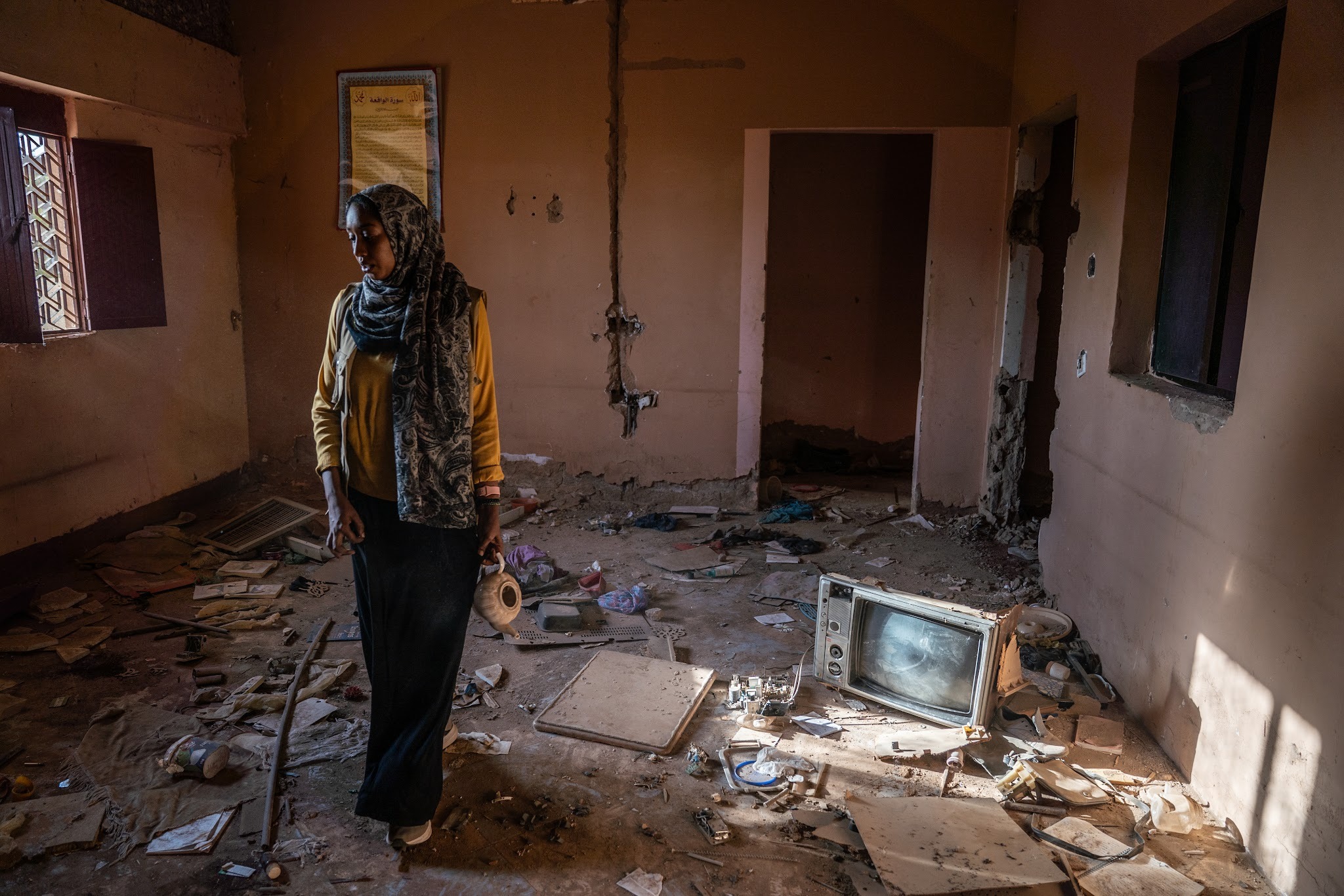
A woman holds a teapot, one of the few things in her Khartoum home not damaged or looted, after returning to the house in April. Photo by Giles Clarke.
Speaking after a visit to Khartoum in April, Samantha Chattaraj, Emergency Coordinator for the UN’s World Food Programme, said “vast parts of the city are destroyed” and that conditions for civilians were “absolutely devastating”. She added that, for the many expected to return home this year, “their basic needs – including food – need to be met”.
A UN fact-finding mission also said this week that the war is “far from over” and that both sides are weaponising humanitarian aid while the “scale of human suffering continues to deepen”.
In the conflict itself, the last week has seen the RSF gain strategically important areas in Northern State, a sparsely-populated region that spans much of north-western Sudan and has so far been largely unaffected by the war.
Last Wednesday, the group took the Triangle border zone, where the borders of Sudan, Egypt, and Libya meet, and where SAF had had a small military presence. Most SAF troops in the area withdrew to the Chevrolet Garrison, a military base around 170km to the south that SAF had held since capturing it days after the outbreak of the war, Sudan War Monitor reports. SAF said in a statement that it had made the move as part of “defensive arrangements to repel aggression”, but at the start of this week the base also fell to the RSF.
In statements on Telegram celebrating the gains, the RSF said the Triangle zone was an “economic and strategic hub” for trade and transportation and that the area contained “rich natural resources, including oil, gas, and minerals”.
It also claimed to be “placing all its resources at the disposal of humanitarian aid organizations, to secure relief convoys and ensure their safe and efficient delivery to those in need” in Darfur and Kordofan. At least 4,278 people were displaced by fighting in the area just between Tuesday and Sunday, according to DTM figures.
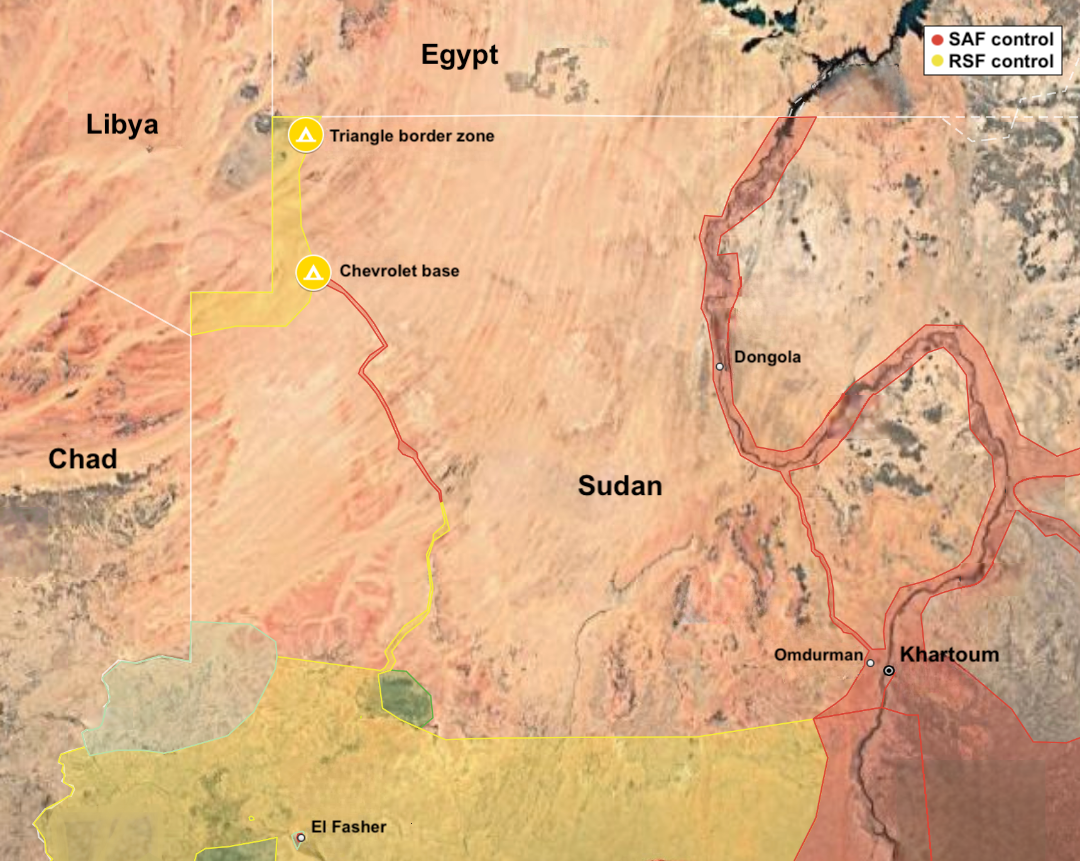
The gains are expected to be a significant boost to the RSF’s efforts to maintain supply lines to its forces in North Darfur - which sits immediately to the south - and could presage a renewed attempt to take El Fasher, which has been under a months-long siege and remains the only major city in Darfur not under RSF control.
Analysis of satellite imagery by one open source reporter suggests a recent uptick in the number of cargo flights between the UAE, which is known to be supporting the RSF, and Kufra airport in southeastern Libya. The group has previously used the Libya-Sudan border to smuggle weapons and profit from illegal trade, according to Sudan War Monitor.
Interviews available on request. Names have been changed due to safety concerns.
Ahmed told Avaaz:
“I went back to Omdurman before Eid al-Adha in April, moving between the Umbadda, Al-Ardah, and Al-Thawra neighborhoods. It was my first time back since the war. I used to live in Umbadda before the conflict, and I stayed there for two months after the war broke out, until I managed to get my family out in June 2023.
“We left on June 29, 2023, and traveled extensively — from Halfa to Port Sudan — before finally settling in [Northern State capital] Dongola. We were only able to return after the RSF was pushed out of central Khartoum on March 22, 2025, although they still had forces in Salha, Omdurman at the time.
“When I returned, life in Al-Thawra was relatively good, but in Umbadda it was nearly nonexistent — no water, no electricity. Our homes had been completely looted. Nothing was left behind. Some houses were stripped bare, right up to the roof. I’ve heard that things have started to improve a little, especially with young people returning to Umbadda.
“I do plan to go back — but not yet. I’ll return once electricity and water are restored. Our entire house was looted, and our cars were stolen too. But once power returns, I’ll go back and start again, step by step.
“Right now, I’m living in Dongola. Thank God, life here is simple, and the joy of being surrounded by family and loved ones is the best part. People here are kind by nature — doors stay open 24 hours a day. There’s no theft, no violence.
“But the problem in Dongola is the lack of work. Most jobs are seasonal — farming or mud construction — and the income isn’t enough. That’s why people often have to travel for work, and most families rely on relatives living abroad.
“These days, however, the RSF has taken control of the area near the border triangle between Sudan, Libya, and Egypt. That poses a serious threat to the state. But most of the young men here are mobilized, trained, and ready to defend their lands and families.”
The weekly dispatch features the latest developments, first-hand testimony, footage, photos, stats and analysis on Sudan. We can connect you with voices from the ground, experts and survivors of the war. Please contact Christy Cooney on +44 7935 296 004 / sudan@avaaz.org
To get this briefing in your inbox each week, sign up here.
Deploying a civilian protection mission offers the most direct path to protecting civilians and stemming atrocities in Sudan, according to a paper published Tuesday.

More than 21,000 people have been displaced by renewed fighting in Blue Nile state, according to reports, with both sides believed to be sending additional forces to the region and aid workers warning of a “catastrophic” impact for civilians.


Avaaz Foundation
110 Golden Lane | London, England, EC1Y 0TG
1330 6th Avenue, Suite 23A | New York, NY 10019, USA



.svg)


