
TUE 14 APR - A risk of famine continues across much of Darfur and Kordofan despite recent aid deliveries to the worst-affected areas, according to monitors.
The latest assessment from the Integrated Food Security Phase Classification (IPC) found ‘emergency’ levels of hunger across much of North Kordofan, South Kordofan, and North Darfur, while levels in some communities remained ‘catastrophic’.
It comes ahead of the third anniversary of the outbreak of the war on Wednesday 15 April.
Emergency hunger indicates that households are only able to avoid an extreme lack of food by selling other essentials, while catastrophe means they are totally unable to do so, leading to critical acute malnutrition and death.
An area is said to be in famine when, among other conditions, at least 20% of households are suffering catastrophic hunger.
In October, the IPC found that famine was occurring in the North Darfur city of El Fasher, which spent 18 months under siege before falling to the Rapid Support Forces (RSF) that month.
Famine was also found to be present in the South Kordofan city of Kadugli and thought to be present in nearby Dilling.
The latest assessment concluded that, as of February, all three cities had moved back to emergency levels, attributing the change to “recent shifts in access and displacement”.
Small amounts of aid have reached El Fasher since the RSF took the city and ended its siege, while the UN has been able to make a number of deliveries of aid to Kadugli and Dilling over recent months.
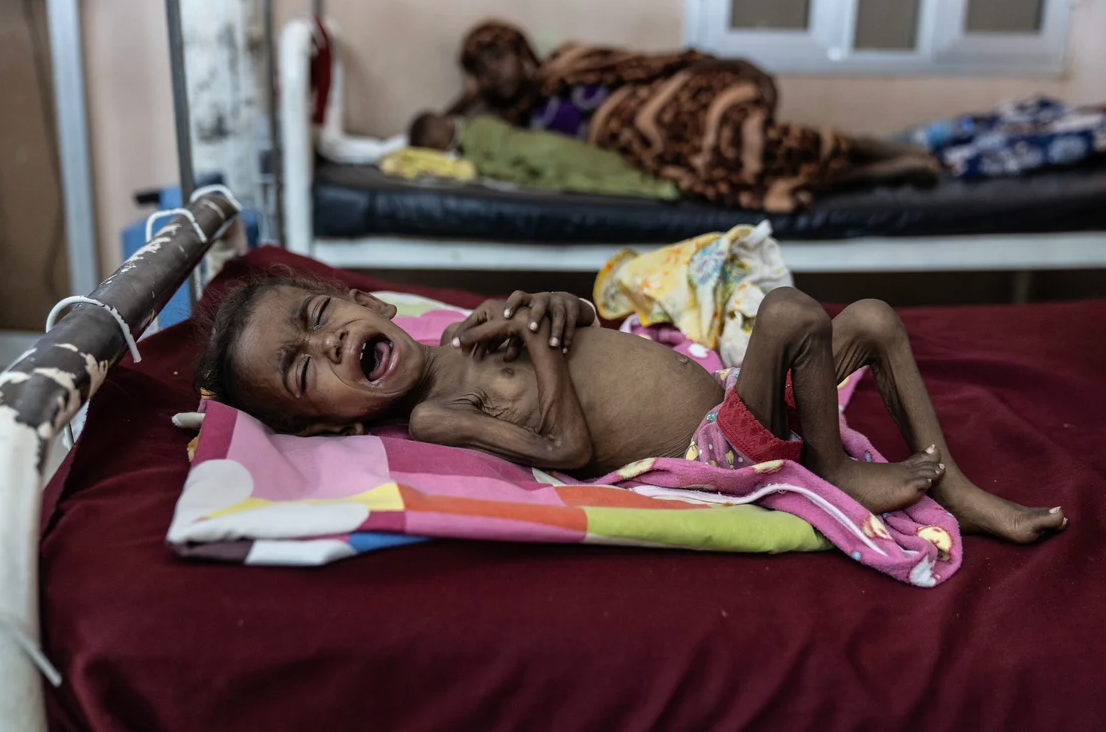
The IPC said that, despite the broader change, some individual communities remained at catastrophic levels, expressing particular concern about parts of Kadugli, Dilling, and areas along North Darfur’s border with Chad that have seen significant ground fighting over recent months.
Similarly highlighted was North Kordofan capital El Obeid, currently held by the Sudanese Armed Forces (SAF), which has been the target of frequent shelling for months.
The city has also received thousands of people displaced from the surrounding area amid attempts by the RSF to bring it under siege.
The IPC said hunger was being caused by “conflict, displacement, and the early start of the lean season [the period when food stocks are depleted but the next harvest is not yet ready]”.
It added that emergency levels of hunger were expected to spread across Darfur, Kordofan, and Blue Nile state - the scene of a recent uptick in fighting - over the coming months and that the number of people needing humanitarian aid was expected to reach 22 to 23 million.
The assessment coincides with a report published by a group of NGOs setting out the ways in which, for many, food insecurity is a direct consequence of the conflict.
The report said many farmers have been displaced and forced to abandon their crops, while even those who are able to complete a harvest face being beaten, robbed, or extorted while transporting their produce.
Those dangers have “disrupted the movement and processing of food, driven up prices and forced markets to shrink or operate intermittently”, it said, while foods like meat, vegetables, oil, sugar, and spices have for many become luxuries.
Another report last month by the Yale Humanitarian Research Lab showed that, during the siege of El Fasher, the RSF deliberately razed dozens of agricultural communities in the surrounding area in order to cut off the supply of food to those inside.

Comparing previous maps from the IPC shows the extent to which hunger across Sudan has been worsened by the outbreak of the war.
In February 2020, levels of food insecurity across most of the country were ‘minimal’ or ‘stressed’.
By February 2023, two months before the outbreak of the war, much of the country had been pushed to stressed or crisis levels by widespread floods, regional conflict, and the Covid pandemic.
By February of this year, most of the country was at crisis or emergency levels.
RSF carries out ‘intimidation and kidnap of civilians’ after dozens killed in wedding strike
The RSF has launched a campaign of looting, intimidation, and kidnap after dozens of people were killed in a drone strike on a wedding in North Darfur, a resident has told Avaaz.
The strike, believed to have been carried out by SAF, occurred in the town of Kutum on Wednesday, with women and children reportedly among the dead.
Kutum, along with most of Darfur, is currently under RSF control and has been the target of multiple drone strikes over recent months.
Speaking from the town, civilian Fatima Mohamed* said people there had been “living though some of the worst days of our lives” since the fall of El Fasher.
“Drone strikes and shelling are ongoing and happening daily,” she said.
“SAF is targeting RSF positions across different parts of Darfur, tracking their movements and weapons depots.”
She said that, since the strike last week, RSF fighters had “spread across neighbourhoods carrying out intimidation campaigns against civilians”.
“They have raided many homes, looted property, and are accusing people of collaborating with the army,” she said.
“Just last night, RSF forces raided the home of our neighbours in Kutum. They took the brothers, sisters, a nephew, and some female guests to an unknown location.
“They also looted belongings, fired shots into the air to terrorise residents, and surrounded the neighbourhood.”
Fatima Mohamed said the campaign appeared to be particularly targeting members of tribes with which the RSF has had tensions, such as the Mahamid, a subgroup of the Rizeigat.
Among the most prominent leaders of the Mahamid is Musa Hilal, a longtime rival of RSF leader Hemedti whose stronghold in nearby Misteriha was attacked and seized by the RSF in February.
Al-Nour “Guba”, an RSF commander who last week defected to SAF (more below), is also a member.
Fatima Mohamed said the RSF had been going house-to-house inspecting people’s phones and that, since Sunday, at least 12 Mahamid people had been arrested.
“This is clearly deliberate targeting, not a routine or temporary measure,” she said.
“There has also been a wider crackdown, including the confiscation of motorcycles and vehicles, along with strict restrictions such as banning the wearing of face coverings and carrying weapons.
“Movement is extremely difficult, and people can be targeted at any moment.”
Reports of the estimated death toll from Wednesday’s strike varied.
UN spokesperson Stéphane Dujarric said at least 30 people had been killed. Citing local sources, Sudan Tribune said the figure was over 40, with over 100 injured, though added that members of the RSF were among those killed.
In a statement, the RSF said 56 people had been killed, including 17 children, and claimed that “all of [them] were innocent civilians”.
Human rights group Emergency Lawyers said it believed SAF was responsible and that the strike was “part of a continuous series of indiscriminate drone strikes, carried out in the context of an exchange of attacks between the warring parties on civilian areas”.
Speaking to reporters, Dujarric said the strike showed civilians were still “bearing the brunt of escalating violence” in Sudan.
“Civilians and civilian infrastructure must be protected, in line with international humanitarian law,” he said.
Senior RSF commander defects to SAF
A senior RSF commander in North Darfur has defected to SAF amid tensions with RSF leadership, according to reports.
Citing multiple sources, Sudan Tribune says General Al-Nour Ahmed Adam "Guba” defected on Saturday.
Guba previously headed Peace Shield, an RSF division purportedly created to ensure civilian protection in Darfur after the mandate of the UNAMID peacekeeping mission expired in December 2020.
Statements and pictures published by the RSF show Guba acting as a representative of the group at public community events in Darfur.
Guba was reportedly a senior figure during the offensive to take El Fasher and is believed to have been dissatisfied when a rival, Gedo Abunshouk, was made the RSF commander in North Darfur.
The weekly dispatch features the latest developments, first-hand testimony, footage, photos, stats and analysis on Sudan. We can connect you with voices from the ground, experts, and survivors of the war. Get in touch on +44 7514 796 678 or sudan@avaaz.org
To get this briefing in your inbox each week, sign up here.
Deploying a civilian protection mission offers the most direct path to protecting civilians and stemming atrocities in Sudan, according to a paper published Tuesday.

More than 21,000 people have been displaced by renewed fighting in Blue Nile state, according to reports, with both sides believed to be sending additional forces to the region and aid workers warning of a “catastrophic” impact for civilians.


Avaaz Foundation
110 Golden Lane | London, England, EC1Y 0TG
1330 6th Avenue, Suite 23A | New York, NY 10019, USA



.svg)


