
TUE 31 MAR - Hundreds of people have fled their homes as the Rapid Support Forces (RSF) prepares its latest attack on Sudanese Armed Forces (SAF) territory along the Ethiopian border, according to reports.
Recent weeks have seen the group capture a number of areas across the south of Blue Nile State, including the key border town of Kurmuk.
The RSF, along with the allied Sudan People’s Liberation Movement-North (SPLM-N), is now amassing troops around the town of Geisan ahead of a possible assault, Sudan Tribune reports.
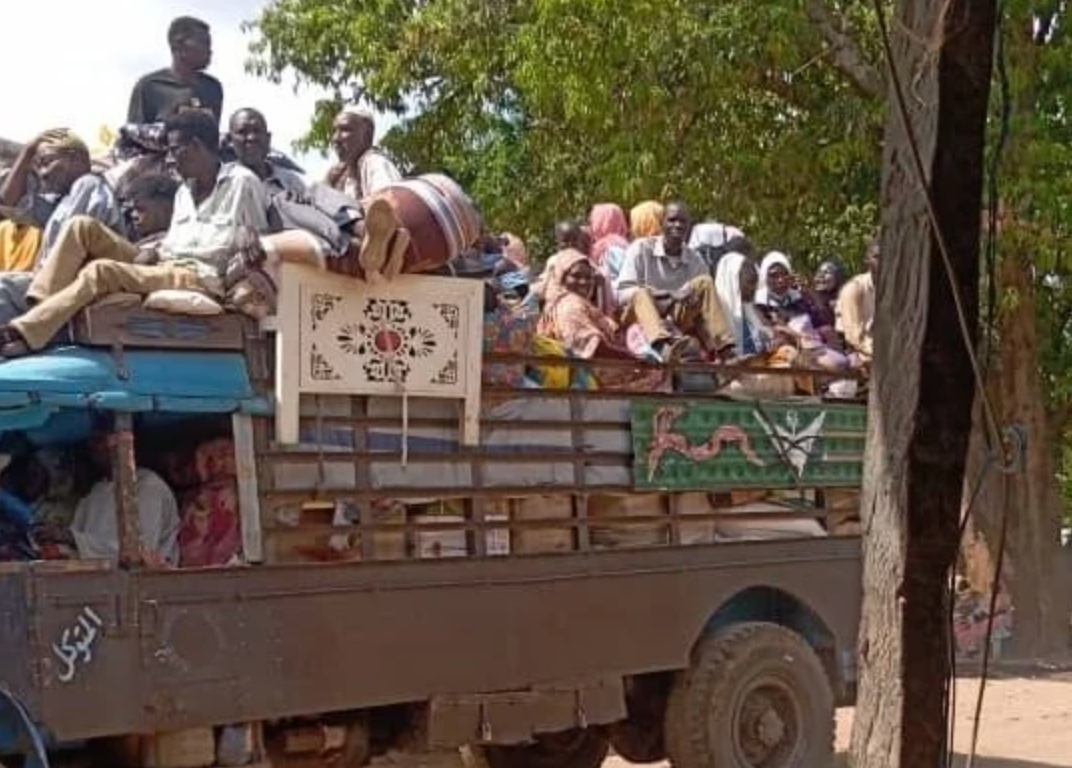
An estimated 329 households - around 1,645 people - were last week displaced from Geisan towards the northerly districts of Roseires and Wad Al Mahi, according to the International Organisation for Migration (IOM).
On Saturday, the Geisan Emergency Response Room (ERR) said the number of households had reached 425.
In a statement, it said those being displaced were facing “severe shortages of basic necessities, including food, water, shelter, and healthcare” as well as “significant challenges in reaching safe areas”.
It also shared a number of images of displaced people, including one showing dozens of people crowded onto the back of a truck.
Speaking to Avaaz, a local aid worker, Safaa*, said the situation had become “very tense” and that people were fleeing mainly for “fear of violations” by the RSF if it were to take the town.
“Another reason is that we heard the army [SAF] was allowing civilians to leave, which people understood to mean they would not be responsible for us if anything happened,” she said.
In other towns - such as Kadugli, South Kordofan - SAF has previously stopped civilians leaving and insisted an area was safe, despite the risk of an RSF attack, while acknowledging a “responsibility to ensure… public safety”.
Safaa added that the journey being taken by many away from Geisan was “very difficult”.
“There is no transportation, no animals, nothing,” she said. “Most movement between these areas is done using small cars that cannot carry large numbers of people.
“There have been injuries caused by drones, and cases of miscarriage because women were displaced while pregnant. Women are facing very serious challenges, including a lack of sanitary supplies and clean water.”
The RSF has made gains across the south of Blue Nile in recent weeks and is believed to be targeting state capital Damazin in the north.
On Thursday, it took a SAF garrison in the central town of Maqaja, reportedly without any visible signs of fighting.
Kurmuk, which sits around 60km west of Geisan, fell to the RSF on 23 March following days of ground clashes in the surrounding area.
More than 30 civilians were killed amid fighting, shelling, and drone strikes, according to the UN’s Office for the Coordination of Humanitarian Affairs (OCHA).
After entering the town, the RSF also looted medical devices and equipment from hospitals and pharmacies, according to the Sudan Doctors Network (SDN).
Kurmuk sits on one of the main roads linking Blue Nile and southeastern Sudan with Ethiopia.
The RSF’s recent focus on Blue Nile is thought to be part of an effort to open new supply lines from Ethiopia following disruption to others from Chad and Libya, which border Sudan to the west and northwest.
The group has reportedly opened training camps on the Ethiopian side of the border, while SAF officials have accused Ethiopia of allowing the RSF to launch attacks from its territory.
OCHA has said that “escalating hostilities near the border with Ethiopia have severely constrained humanitarian operations” in Blue Nile and that movement beyond Damazin is “largely suspended”.
Satellite images show the huge area razed by a fire in North Darfur’s Tawila displacement camp that displaced around 971 households.
The fire, which broke out on 22 March and is thought to have begun accidentally, follows numerous similar incidents over recent months.
Images published in a report by the Yale Humanitarian Research Lab (HRL) show an area of thermal scarring at the camp that was found to be “consistent with the spread of an incidental fire”.
Approximately 881 shelters were destroyed by the fire, while another 90 were partially damaged, according to the IOM.
One child, aged around five, died after suffering severe burns, while another person was injured, Dabanga reports.
The number of people displaced was estimated to be between 4,500 and 6,000, according to coordinators for the local Emergency Response Rooms.

Yale HRL said some new shelters were already visible in the area razed, but that the number remained significantly less than before the fire.
The fire is believed to have been caused by people cooking over an open fire and to have been spread by strong winds.
The shelters in Tawila are also densely packed and often made of flammable materials such as wood and straw.
On 14 March, another fire displaced around 130 households, while in February at least 811 households were displaced by three separate fires.
A further 293 households were displaced by fires in November and December.
Almost all the fires occurred in Al Umda, one of four sites set up during large waves of displacement in mid-2025.
The population of Al Umda before the latest fire was estimated to be 269,850, the majority of them people who fled Zamzam - then Sudan’s largest displacement camp - when it was attacked and razed by the RSF last April.
More than 500 civilians have been killed in drone strikes across Sudan since the start of this year, according to the UN.
Recent months have seen a frontline form in the central Kordofan region and both sides increasingly target each other’s territory with drones instead of ground assaults.
The deaths included in the UN toll occurred between 1 January and 15 March, with the vast majority in North Kordofan, South Kordofan, and West Kordofan states.
The UN Human Rights Office said the deaths “underline the devastating impact of high-tech and relatively cheap weapons in populated areas”.
The last two weeks have seen numerous further strikes in which scores more people have been killed.
A total of 70 people, including seven women and 13 children, were killed in a SAF drone strike on a teaching hospital in Al Daein, East Darfur on 20 March.
The hospital had been the main source of medical care for more than two million people in the region, the Associated Press reports.
On Saturday, 14 people were killed and 23 were injured in shelling by the RSF and SPLM-N in the South Kordofan city of Dilling, according to the SDN.
Saudi Arabia ‘suspends support for SAF-Pakistan arms deal’
A deal under which Pakistan would supply military equipment to SAF has reportedly stalled amid doubts over support from Saudi Arabia.
According to Africa Intelligence, Saudi Arabia has put the deal on hold because of questions over SAF as a long-term partner as well as the presence of Islamists among its supporters.
Riyadh is also said to be considering moving away from backing either side in the conflict and calling instead for a civilian-led government in Sudan.
The deal, first reported by Reuters in January, was said to be worth $1.5bn and would have seen Pakistan supply SAF with aircraft, air defence systems, and more than 200 drones.
Funding for the deal was believed to be coming at least in part from Saudi Arabia.
The weekly dispatch features the latest developments, first-hand testimony, footage, photos, stats and analysis on Sudan. We can connect you with voices from the ground, experts, and survivors of the war. Get in touch on +44 7514 796 678 or sudan@avaaz.org
To get this briefing in your inbox each week, sign up here.
Deploying a civilian protection mission offers the most direct path to protecting civilians and stemming atrocities in Sudan, according to a paper published Tuesday.

More than 21,000 people have been displaced by renewed fighting in Blue Nile state, according to reports, with both sides believed to be sending additional forces to the region and aid workers warning of a “catastrophic” impact for civilians.


Avaaz Foundation
110 Golden Lane | London, England, EC1Y 0TG
1330 6th Avenue, Suite 23A | New York, NY 10019, USA



.svg)


