
TUE 17 MAR - A key logistics hub in central Sudan has been recaptured by the Rapid Support Forces (RSF) after offensives targeting the remaining strongholds of the Sudanese Armed Forces (SAF) in Kordofan and Darfur.
The town of Bara, in North Kordofan state, fell to SAF earlier this month, but was taken back by the RSF in an assault launched early on Monday.
Control of Bara is considered central to SAF efforts to repel RSF attacks on state capital of El Obeid, which sits around 60km to the south.
Bara’s central location between Khartoum, Darfur, and the Kordofans also makes it an important node for military logistics and supply lines.
Also on Monday, the RSF said it had taken the North Darfur town of Kernoi, while simultaneous offensives on nearby Tina - which sits on the Chad border - and the South Kordofan city of Dilling were repelled.
The RSF attacked Bara using ground forces, artillery, and drones, successfully driving SAF forces southwest towards the town of Dankoj, Sudan Tribune reports, citing local sources.
In a statement on Telegram, the RSF claimed to have inflicted a “crushing defeat” and to have seized “large quantities of weapons and military equipment”.
It added that the development would help it advance “towards the remaining enemy strongholds and centres of concentration of their terrorist militias”.
Footage posted by the RSF showed its soldiers travelling along a tarmacked road and entering a town on the back of pickup trucks. They could also be seen clambering on the wreckage of vehicles apparently abandoned by SAF.
On Tuesday, SAF said its forces “engaged in a heroic battle” in Bara but had “repositioned outside the city”.
The RSF held Bara from the start of the war in April 2023 until September of last year, when it was taken by SAF, and the months since have seen it repeatedly change hands.
Earlier this month, SAF took control of the town following aerial attacks on RSF positions and a ground assault launched from Dankoj.
The Kordofan region has become the central battleground of the war since the RSF took North Darfur capital El Fasher - the last state capital in Darfur to fall under its control - in October.
El Obeid is a key target for the group as it seeks to drive SAF forces further east and maintain a buffer region between areas of SAF control and its own territory in Darfur.
In July, at least 284 civilians were killed in a series of massacres by the RSF in villages in the rural areas surrounding Bara, according to the Emergency Lawyers human rights group.
Residential homes shelled in Dilling assault
Also early on Monday, the RSF and the allied Sudan People’s Liberation Movement-North (SPLM-N) launched an assault on the town of Dilling, which lies around 140km south of El Obeid.
A civilian in the town, Murtada Adam*, told Avaaz that the group attacked the town from three directions shortly after dawn prayers.
He said that, even after the attack was repelled, shelling of the city continued, including in residential areas.
“There were civilian casualties. Many died because of shelling in the streets, and some inside their homes,” he said.
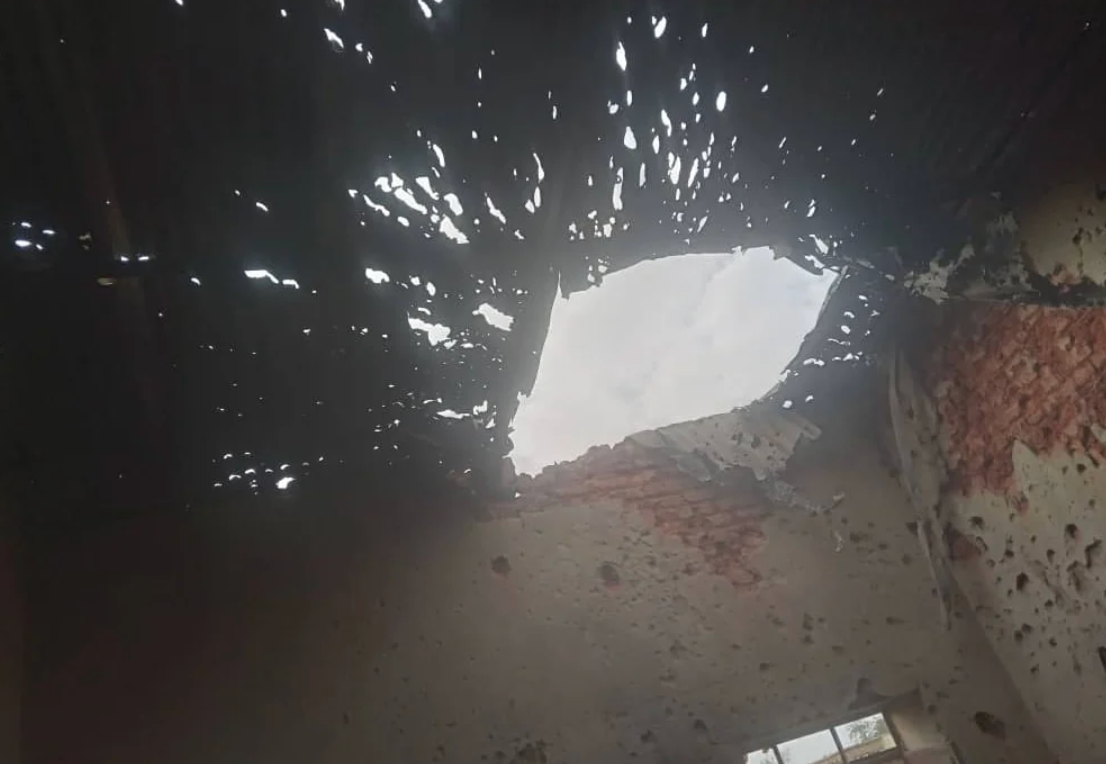
Footage and pictures shared by Murtada Adam showed damage done to his home during the shelling.
A room can be seen with a large hole in the roof and pockmarks on the walls, while much of the furniture is covered in dust and debris.
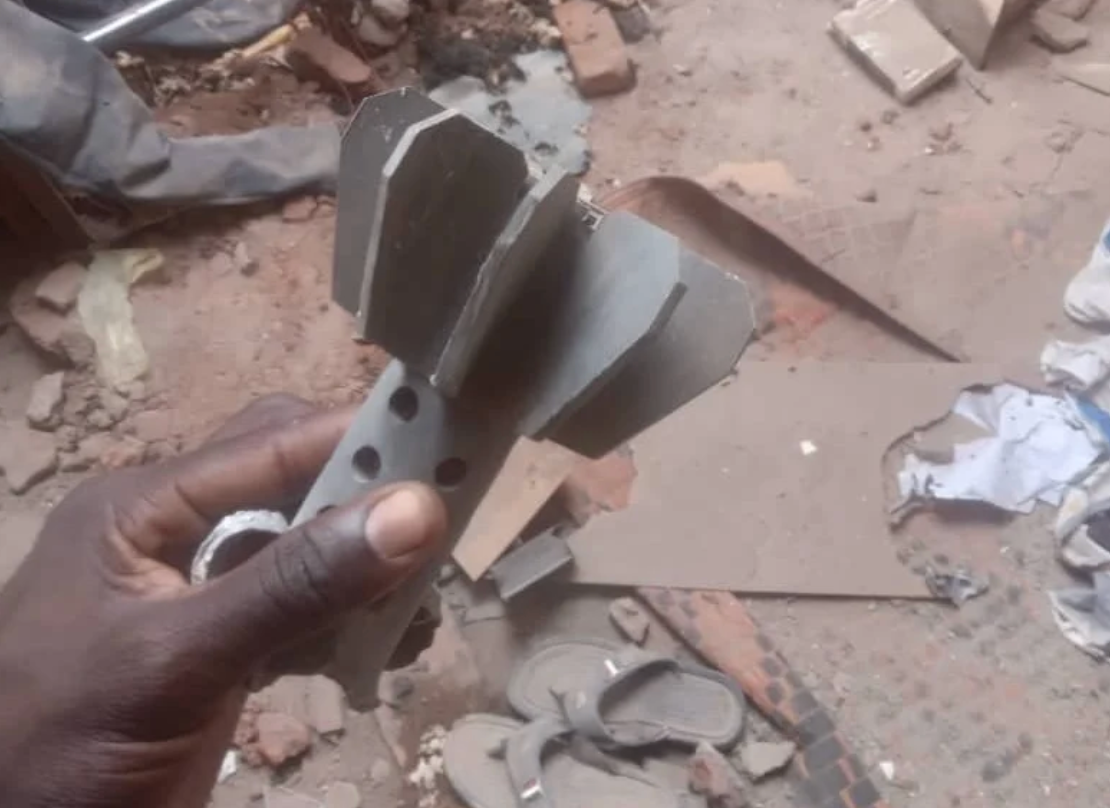
Another picture shows what appears to be the remains of a shell.
Murtada Adam said many homes in the city had been similarly damaged by shelling and that in recent weeks “daily life had completely stopped”.
He added that a lack of goods entering the city meant stocks in the markets were running low, leaving many to rely on food baskets distributed by community kitchens.
As with Bara to the north, seizing Dilling would enable the RSF to target El Obeid from the south.
In late January, SAF lifted a long-running siege on the town, but the weeks since have seen continued fighting and instability in the surrounding areas, once again impeding access.
Last Tuesday, seven people, including a child, were killed and 13 others were injured by shelling on Dilling, Dabanga reports.
Renewed clashes near Chad border
Renewed clashes also erupted in North Darfur as the RSF sought to push SAF and the allied Joint Forces out of the last areas of Darfur still under their control.
The RSF reportedly seized Kernoi, an area east of the Chad border where, according to the International Organisation for Migration (IOM), fighting in January already displaced more than 11,000 people.
The RSF said in a statement that it had “succeeded in clearing the area and forcing the remaining elements [of SAF] to withdraw after suffering heavy losses, restoring full control over Karnoi and its surrounding areas”.
Footage also showed RSF soldiers apparently in Tina, with one clip showing them in front of a sign for the Tina police headquarters, but similar footage later showed SAF soldiers in front of a local government building in the town.
In a statement on Tuesday, SAF claimed to have repelled the attack on Tina after “inflicting heavy losses… in lives and equipment”.
Tina is an important strategic target for the RSF because it sits on one of the only supply routes into North Darfur not already under its control.
While SAF and its allies have lost the major urban areas in Darfur, they still hold territory on the western border of North Darfur.
Last month, Chad temporarily closed its border with Sudan after five Chadian soldiers were killed amid clashes between the RSF and militia groups loyal to SAF, Reuters reported.
A hospital supported by Médecins Sans Frontières (MSF) in Tina was also forced to relocate over concern for the safety of patients and staff.
Further south, near the Adre border crossing, at least 11 people were burned to death after a drone strike by SAF set alight to fuel reserves at the Adikong Market on Thursday, MSF said.
Footage published by Sudan War Monitor showed thick columns of smoke and a number of secondary explosions rising over an area crowded with people.
More than 200 killed in drone strikes in one week, says UN
Across Sudan, more than 200 people were killed in drone strikes between 4 and 11 March, UN human rights chief Volker Türk said on Thursday.
Türk said he was “appalled” by the attacks and that the parties to the conflict continued to use “increasingly powerful drones to deploy explosive weapons with wide-area impacts in populated areas”.
“It will soon be three full years since the senseless conflict in Sudan began, devastating millions of lives and livelihoods,” he said.
“Yet the violence, fueled by these new technologies of war, simply keeps spreading. It is high time it came to an end.”
The attacks included SAF strikes on a market and a hospital in the town of Muglad, West Kordofan on 4 March in which at least 50 people were killed, according to the UN.
At least 33 people were killed in further SAF strikes on markets in the towns of Abu Zabad and Wad Banda, also in West Kordofan, on 7 March, France24 reports.
Across South Kordofan, at least 39 civilians were killed in artillery shelling by the RSF and SPLM-N on 4 and 5 March, the UN said.
The IOM estimated that 240 people were displaced by insecurity in Dilling on 5 March.
On Wednesday, at least 17 people were killed in an RSF strike on the village of Shukairi in White Nile, according to the Sudan Doctors Network. Multiple reports suggested that the strike hit a school and that the majority of those killed were female students.
*Names changed due to safety concerns.
The weekly dispatch features the latest developments, first-hand testimony, footage, photos, stats and analysis on Sudan. We can connect you with voices from the ground, experts, and survivors of the war. Get in touch on +44 7514 796 678 or sudan@avaaz.org
To get this briefing in your inbox each week, sign up here.
Deploying a civilian protection mission offers the most direct path to protecting civilians and stemming atrocities in Sudan, according to a paper published Tuesday.

More than 21,000 people have been displaced by renewed fighting in Blue Nile state, according to reports, with both sides believed to be sending additional forces to the region and aid workers warning of a “catastrophic” impact for civilians.


Avaaz Foundation
110 Golden Lane | London, England, EC1Y 0TG
1330 6th Avenue, Suite 23A | New York, NY 10019, USA



.svg)


