
Welcome to Sudan Newsroom, a resource for journalists, civil society groups, policymakers, and anyone trying to navigate the complexities of the war in Sudan. Here you’ll find explainers, glossaries of the key actors, timelines, maps, statistics, and more. We’ll also be publishing our regular dispatches on the latest developments from the conflict as well as investigations into the forces helping to prolong it. As ever, if you have any questions, feedback, or requests for help covering the war, we’d love to hear from you. You can reach us at sudan@avaaz.org.
The war in Sudan broke out on 15 April 2023 between the Sudanese Armed Forces (SAF), which is the country’s official military, and the Rapid Support Forces (RSF), a paramilitary group with its origins in the genocide in Darfur. Until then, the two had jointly governed Sudan since seizing power in a coup in 2019 amid mass protests against dictator Omar al-Bashir. The new government initially included civilian representation, but a further coup in late 2021 removed the civilian component and established a military junta. Both groups remained in theory committed to an eventual transition to civilian rule, but relations broke down over disagreements about the role each should play in the future of Sudan. The fighting began in Khartoum, with each side later accusing the other of having fired the first shot, and quickly spread across the country. The ensuing conflict has ravaged huge swathes of the country, fuelled by competition for land, power, and resources, and seen civilians systematically targeted by both sides. Estimates of those killed reach into the hundreds of thousands, while millions have been displaced and many more are experiencing the worst humanitarian crisis anywhere in the world.
Fighting intensifies in the Kordofan region as the RSF and SPLM-N (al-Hilu) expand operations, opening a new front in the war and displacing thousands of civilians.
A hospital in Al Nahud, West Kordofan is reportedly hit by a SAF drone, causing multiple civilian casualties.
Later in the same month, RSF drone strike on El Obeid kills civilians, highlighting the growing use of drone warfare in North Kordofan.
UN High Commissioner for Human Rights Volker Türk warns that an imminent RSF offensive on El Obeid could lead to mass atrocities, urging immediate international action to prevent a repeat of Zamzam and El Fasher.
The UN recorded over 1,000 civilian deaths due to drone strikes by the mid-point of the year.
The UN Human Rights Council holds an urgent debate on El Obeid, with Volker Türk issuing the highest "red alert" and warning that another humanitarian catastrophe is unfolding.
The US determines that the RSF is committing genocide in Sudan and imposes sanctions on its leader, Mohamed Hamdan Dagalo (Hemedti).
The RSF and allied groups meet in Nairobi, Kenya for talks on forming a parallel government in areas under RSF control.
SAF captures Khartoum from the RSF and seizes control of the highly symbolic Presidential Palace. Widespread reports of reprisal killings and summary executions carried out by SAF and its allies.
SAF files a lawsuit at the International Court of Justice (ICJ) against the United Arab Emirates for alleged breaches of the Genocide Convention.
The ICJ dismisses the case against the UAE and SAF’s request for provisional measures against the UAE.
The RSF marks the second anniversary of the conflict by declaring a parallel government commonly known as Tasees. The SPLM-N (Sudan People’s Liberation Movement-North), led by Abdulaziz Al-Hilu, is a key ruling party.
The RSF captures Zamzam, Sudan’s largest IDP camp following a major offensive. Over a thousand civilians are reportedly killed and hundreds of thousands displaced, prompting widespread international condemnation and warnings of further atrocities against civilians.
Following an 18 month siege, the RSF captures El Fasher, home to SAF’s final remaining army base in Darfur. The RSFreportedly conducts mass killings, mass detentions and widespread abuses against civilians –including rapes of women and boys, men and girls. Pools of blood are visible from space. Hundreds of thousands of civilians flee to nearby Tawila, an area under the control of SLM-AW (the Sudan Liberation Movement faction led by Abdul Wahid).
Much of the footage of the attack is self-recorded by RSF fighters. Despite months of warnings of atrocity crimes from the Sudanese and global experts, the international community takes little action.There are continued warnings of future atrocity crimes.
The RSF captures the SAF army base in Babanousa, capital of West Kordofan, triggering waves of civilian displacement.
US-brokered peace talks in Geneva are attended by the RSF, representatives of the UN and the African Union, and observers from Egypt and the UAE but are boycotted by SAF. Following the close of the talks, Burhan gives a press conference vowing to “fight for 100 years” to win the war
War breaks out between SAF and the RSF amid competition for power and influence in any future Sudanese government. Among the key points of contention is Hemedti’s unwillingness to have the RSF brought under the total control of the Sudanese military, a move that would have significantly decreased his personal power, control, and influence over the group.
An agreement for a temporary ceasefire – known as the Jeddah Declaration of Commitment to Protect the Civilians of Sudan – is signed by SAF and the RSF and brokered bySaudi Arabia and the US following talks in Jeddah,Saudi Arabia, but the ceasefire was violated almost immediately.
The RSF launches an attack targeting the predominantly Massalit community in El Geneina, West Darfur. Despite survivors’ “horrifying accounts” of summary executions shared with the UN, the killings continue.
Attempts to revive the Jeddah agreement are inconclusive, as fighting surges across the capital. The RSF is in control of most urban areas with clashes continuing between the SAF and RSF in Khartoum, Omdurman, and Bahri.
The RSF launches a renewed attack on communities in West Darfur in the village of Ardamata. The RSF reportedly killed and injured hundreds of civilians. By the end of November, the RSF is in control of four out of five states in Darfur.
Attempts to revive the Jeddah agreement are inconclusive, as fighting surges across the capital. The RSF is in control of most urban areas with clashes continuing between the SAF and RSF in Khartoum, Omdurman, and Bahri.
Hamdok resigns after being unable to secure an agreement with the military for a transition to civilian rule and amid mounting protests against his perceived cooperation with the military.
Burhan stages a second military coup amid reignited protests and tensions between the military and civilian elements of the government. The TSC is dissolved and Prime Minister Hamdok, as well as five other ministers, are arrested.
The TSC is reconstituted with Burhan and Hemedti still as chairman and deputy chairman.
Hamdok is reinstated following protests against the coup
A violent crackdown by the security forces, including the RSF, sees dozens of protesters killed and hundreds arrested.
President Bashir dissolves the federal government, declares a state of emergency, and replaces state governors with members of the security forces
An ongoing crackdown, including the use of live ammunition to break up demonstrations, fails to quell the protests.
President Bashir is deposed in a coup carried out jointly by SAF and the RSF, but protesters continue to call for a transition to democracy and civilian rule
At least 120 protesters are killed when live ammunition is used to disperse a sit-in in front of the military headquarters in Khartoum.
Amidst international pressure, the military agrees to share power with civilian leaders and the Transitional Sovereign Council is established. Abdalla Hamdok becomes Prime Minister and elections are scheduled for 2023.
Protests break out in cities across Sudan amid discontent over the rising cost of living and basic goods like bread.
The RSF is formally established, mostly from what was the Janjaweed, and brought under the partial control of President Bashir. It is then used as an arms-length paramilitary force to put down further uprisings
The war in Darfur breaks out after the Sudanese government used the Janjaweed, an Arab militia, to put down an uprising by a number of groups who accused the government of oppressing the region’s non-Arab population. The following years saw a campaign of genocide in which hundreds of thousands were killed and millions were displaced.
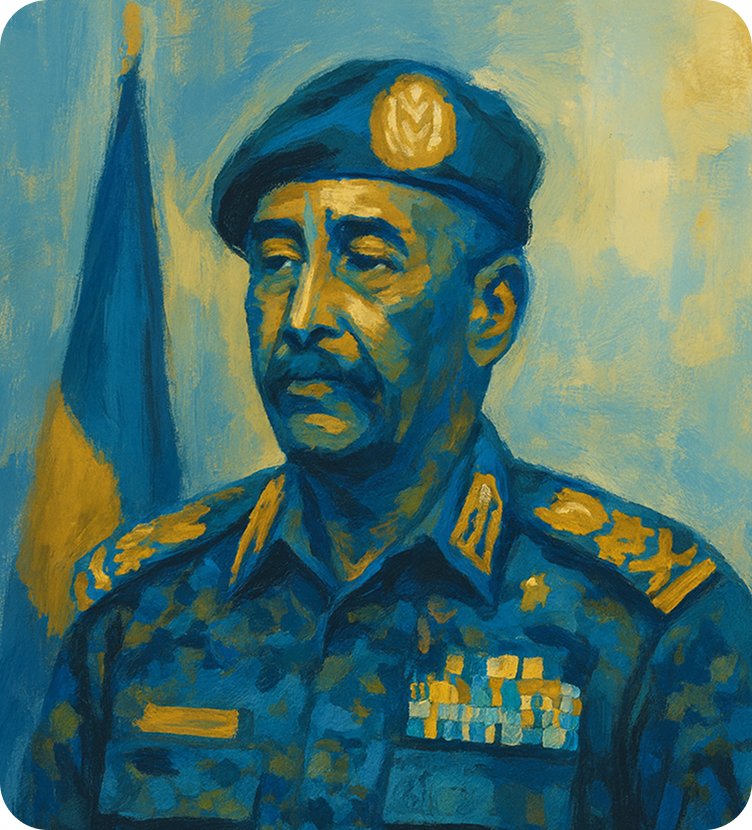
Head of the Sudanese Armed Forces (SAF) and de facto ruler of Sudan
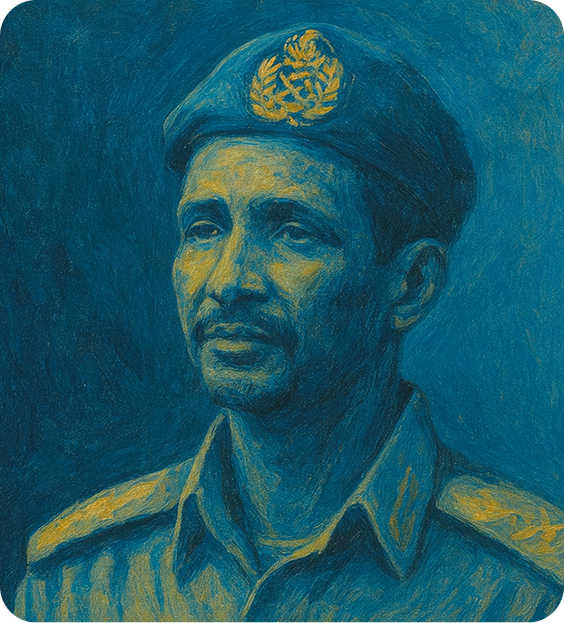
Known as Hemedti Head of the Rapid Support Forces (RSF) and deputy to Burhan until the war began in 2023
Hemedti’s brother and deputy leader of the RSF
Former president of Sudan ousted in a 2019 coup led by al-Burhan and Hemedti. Seized power in a coup himself in 1989
Former prime minster and now leader of the Democratic Civilian Coalition for the Revolutionary Forces, or Smoud, an alliance of political parties and professional associations which favours civilian rule
Leader of a faction of the Sudan People's Liberation Movement–North. Controls much of South Kordofan state and has backed the RSF’s declaration of a parallel government in Darfur
Leader of joint forces
The military of Sudan
A paramilitary group that grew out of the Janjaweed, an Arab militia that took part in a genocide against the non-Arab population of Darfur on behalf of the Sudanese government from 2003
Political party of Omar al-Bashir that was dissolved and banned following his ouster
Collective head of state of Sudan. Established in August 2019, it initially had both civilian and military representatives, but in October 2021 was dissolved in a secondary coup by SAF and the RSF. The following month, it was reformed as a military junta
Junta that ruled Sudan from the ouster of Bashir in Apr 2019 until the TSC was set up that August
Coalition of civilian and rebel groups formed during the 2018-19 protests. It put forward civilians who served on the TSC until the original council was dissolved in October 2021.
A pro-civilian rule coalition formed in October 2023 and headed by Hamdok until its dissolution in February 2025 amid internal disagreement about whether to back RSF attempts to form a parallel government
A coalition formed by Hamdok following the collapse of Tagadum that claims to be neutral in the conflict
A coalition whose members include the RSF and former members of Tagadum that support its attempts to form a parallel government
An armed group that fights in support of the Sudanese Armed Forces
An Islamist militia that fights in support of the Sudanese Armed Forces


Avaaz Foundation
110 Golden Lane | London, England, EC1Y 0TG
1330 6th Avenue, Suite 23A | New York, NY 10019, USA


.svg)


