WED 4 NOV - Blackouts are threatening hospitals, water supplies, and vaccination drives for millions of people amid a wave of drone attacks targeting power stations across Sudan.
At least 18 strikes thought to have been carried out by the UAE-backed Rapid Support Forces (RSF) have hit sites in territory controlled by the Sudan Armed Forces (SAF) since the start of October.
It follows a surge of attacks targeting civilian areas by both sides, with at least 306 people believed to have been killed by drone strikes in the first three weeks of October alone.
On Monday, strikes reportedly hit two power stations in Kassala and an electricity substation in the city of Merowe in Northern State, causing widespread outages.
Merowe sits on the Nile River around 30km south of the Merowe Dam, which - partly because of damage to other stations caused by the war - now provides around 70% of Sudan’s electricity.
In early August, a fire at the dam caused damage to its main transmission cables, triggering blackouts in River Nile, Red Sea, Northern State, and Khartoum states.
On Sunday, drone strikes hit power stations in Al Dabbah and Abu Hamad, which lie to the west and east of Merowe along the Nile, leaving both towns without power, the AP reports.
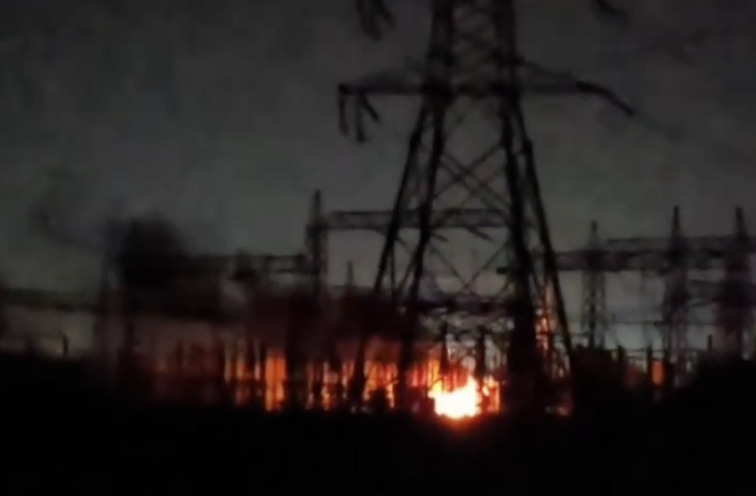
Footage published on social media by Sudan Tribune purported to show a fire burning amid a group of pylons at the Abu Hamad site.
The strike in Al Dabbah - which hosts thousands of people displaced by the massacres in El Fasher last year - killed the station guard, while the subsequent blackouts closed markets, hospitals, and bakeries, the LA Times reports.
Over recent weeks, at least 13 further strikes have reportedly hit power stations across Khartoum, Gezira, Red Sea, River Nile, Sennar, White Nile, Gedaref, and Northern states.
Attacks on power plants, a form of critical civilian infrastructure that sustains life for tens of millions of civilians, could violate international humanitarian law and should be investigated as potential war crimes.
SAF has repeatedly alleged over recent months that such strikes were being launched from neighbouring Ethiopia, and on Sunday said it had lodged a complaint against the country’s government at the UN Security Council.
Speaking to Avaaz, Huda*, a medical worker in Merowe, said she heard the drone strike early on Monday morning.
“A few minutes later the electricity went out everywhere,” she said.
“At first, I thought it might be a problem with the power line or part of the usual scheduled power cuts. But when we saw the smoke and the fire, we realised that the station had been hit.
“The electricity went out immediately that morning and hasn't come back. This is now the second day without power.”
She said she had heard it may take another two or three days for the electricity to be restored, although the frequency of cuts had already forced many residents to adapt.
“In Merowe, most hospitals have been relying on solar energy for some time, especially since the beginning of the war,” she said. “People have reduced their dependence on the public electricity supply because it is unreliable.
“Hospitals now depend on solar panels and batteries. The batteries don't last the whole day and usually run out around 11pm, but at least they help keep things running.”
On Tuesday, the World Health Organisation said attacks on energy infrastructure were affecting lifesaving surgeries, ambulance services, and oxygen supplies.
The Sudan Doctors Network said last week the strikes were also jeopardising dialysis centres, intensive care units, and blood banks as well as the temperature-controlled storage of vaccines across Sudan.
Last week, the SAF-controlled health ministry launched a UN-backed vaccination campaign targeting 11 million children to try to contain the spread of polio.
Previous power outages from drone strikes have forced hospitals to perform surgeries amid blackouts and led to the deaths of incubated newborns, Sky News reports.
Many medical facilities continue to rely on gas-powered backup generators in the face of nationwide fuel shortages, further restricting the ability of civilians to access medical care.
Attacks on energy infrastructure also disrupt internet access, satellite television, and other vital information channels, cutting civilians off from the outside world.
'If the electricity stops, there is no water'
Huda said water supplies to parts of Merowe remained “completely dependent on electricity”.
“Even though solar power systems have been installed at some water stations, water still doesn't reach all neighbourhoods.
“The RSF knows that electricity and water are connected. If the electricity stops, there is no water. I believe that is why they are targeting these facilities, to make our lives even more difficult.”
Outages at water treatment plants caused by strikes on power facilities in places like Khartoum have previously led to cholera outbreaks.
Huda said a lack of power for irrigation pumps would also disrupt the winter planting season for farmers, many of whom relied on their crops to feed their families.
“Beyond the disruption to basic services, people are now afraid to move around early in the morning or go near any government facility or main road,” she said.
“What is certain is that people are suffering. Everyone is just trying to make a living. Even if there are no battles happening near you, drones can still reach your area and bring your life to a complete stop.”
The flow of drones into Sudan increasingly allows both sides of the conflict to carry out strikes hundreds of miles into one another’s territory while avoiding casualties among their own forces.
UN investigations have found “reasonable grounds” to believe the RSF’s supply routes involve individuals and entities in the United Arab Emirates, Chad, southeastern Libya, and Puntland in Somalia, and that up to 2,000 Colombian military contractors are helping to operate and service the group's drones.
The UAE is widely reported to be the principal external backer of the RSF, allegations it denies.
Drones manufactured in Turkey and have repeatedly been identified in use by SAF on battlefields in Sudan. In 2025, the Washington Post reported that Baykar, a company co-owned by the son-in-law of Turkish President Recep Tayyip Erdogan, had shipped at least $120 million worth of weapons, including drones, to Port Sudan.
Iran reportedly supplied SAF with combat drones as part of past attempts to secure a Red Sea naval base, although SAF is now believed to have halted purchases from Iran in the hope of winning US backing during peace talks.
An analysis by Ayin Network found that, of 42 drone strikes recorded since the start of October, only one hit a military target, while the others hit power stations, medical facilities, and displacement camps. The findings raise questions around the intended targets of the strikes given the sophisticated precision-targeting technology that these weapons rely on.
Last week, at least 102 civilians were killed and 113 were injured, including women and children, in a SAF strike on a market in the South Darfur city of Nyala, according to the Emergency Lawyers human rights group.
Arbitrary arrests and intense surveillance ‘shrinking’ civic space in El Obeid, says FFM
Arbitrary arrests and an intensified system of surveillance by SAF authorities are “shrinking” the space for civic life in El Obeid, according to the UN's independent fact-finding mission (FFM) on Sudan.
The city, which serves as the capital of North Kordofan, was previously surrounded on three sides by RSF territory and, according to the UN, was put under “siege-like conditions”.
SAF gains over recent months have reopened supply lines and partly alleviated humanitarian conditions inside, but the latest report from the FFM said the military operations had also brought a clamp down on civil society and anyone suspected of collaborating with the RSF.
“Civic space in El Obeid is shrinking,” it said. “Security actors affiliated with the Sudanese Armed Forces have intensified surveillance, with individuals targeted for their engagement in peace initiatives, humanitarian activities, and human rights work."
It said arbitrary detention was “increasingly functioning as a broader mechanism of social and political control” and being used to target those perceived as influential community figures, critics of the authorities, trade union representatives, and academics.
“The mission finds that reprisals, arbitrary arrest and detention, ill-treatment and torture foster fear and deter civilians from reporting violations, seeking protection and cooperating with accountability efforts, weakening protection and obstructing the prospects for justice,” it said.
A legal amendment passed by SAF authorities at the end of October means journalists can now face the death penalty in Sudan.
The law on “waging war against the state” was expanded to include media activities and digital communications, a move that has been condemned by international and Sudanese media, as well as human rights groups, as a further restriction on press freedoms and access to information during wartime.
Speaking to Avaaz, Samer, a civilian from El Obeid who was arrested last September and held for 93 days, said the security services have come to “classify anyone not inside an army camp as a collaborator with RSF”.
“This has led to a tightening of the security grip in El Obeid city more than in the period after the [October 2021] coup. You can't socialize or chat openly in the city, and the city is very stifled and imprisoned in its fear.
“It's entirely normal for security cell personnel, the Joint Force personnel, and personnel from the Al-Baraa ibn Malik Battalion… to arrest you."
Samer, who we spoke to for an upcoming report on political repression in Kordofan, left Sudan after his release and is available for interviews.
The FFM report also said that, despite the partial reopening of supply lines, the “humanitarian situation in El Obeid remained critical” amid the continued arrival of civilians displaced by fighting elsewhere in the region.
“Shelter and basic services struggled to absorb the arrivals,” it said. “Displaced families faced overcrowded conditions in camps and informal settlements, while others sought shelter with host families, frequently in conditions of inadequate access to water and sanitation, food and other basic services.
“The growing demands further strained host communities, already struggling to meet their own essential needs.”
The weekly dispatch features the latest developments, first-hand testimony, footage, photos, stats and analysis on Sudan. We can connect you with voices from the ground, experts, and survivors of the war. Get in touch on +44 7514 796 678 or sudan@avaaz.org.
To get this briefing in your inbox each week, sign up here.
At least 15 people have reportedly been killed by strikes in West Kordofan amid an offensive that has seen the Sudanese Armed Forces (SAF) gain territory in the state for the first time in almost a year.

Food, water, and fuel shortages are pushing Blue Nile into a “humanitarian crisis”, aid workers have told Avaaz, amid an escalation in fighting that has displaced more than 20,000 people.


Avaaz Foundation
110 Golden Lane | London, England, EC1Y 0TG
1330 6th Avenue, Suite 23A | New York, NY 10019, USA