WED 14 OCT - The Egyptian government has vowed to “protect [its] national resources” and “impose full sovereignty” after allegedly carrying out a strike on a gold mine on the Sudanese border in which at least 72 people were killed.
It comes amid an escalating drone war across Sudan that has claimed the lives of more than 50 other civilians over recent days.
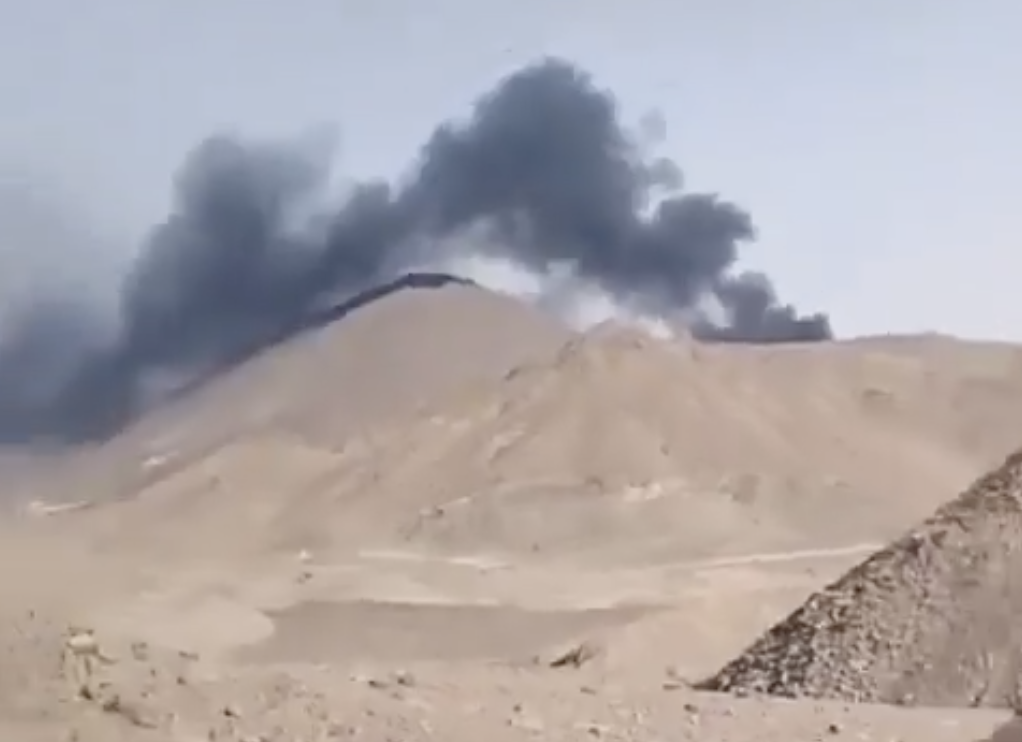
On Saturday, at least five air strikes believed to have been carried out by the Egyptian military hit the Al-Uqaydat mine, which sits in a disputed region in northeastern Sudan.
The area is closest to territory controlled by the Sudanese Armed Forces (SAF), an ally of the Egyptian government, and hundreds of miles from the usual centres of fighting.
Recent years have seen a crackdown by Egypt on illegal prospecting and smuggling routes, particularly in desert and border regions, as part of efforts to protect the revenue from its gold trade and encourage foreign investment.
Footage circulating online following the strikes showed dozens of bodies and body bags on the ground as well as smoke rising over remote mountainsides. In another clip, a secondary explosion can be heard, prompting the cameraman and others to run for cover.
The footage has not been independently verified by Avaaz.
On Monday, a spokesperson for the Egyptian military said its forces were involved in a “campaign to combat illegal gold ore mining” and “impose full sovereignty within the borders of the Egyptian state and protect its capabilities and national resources”.
It also claimed warning leaflets had been dropped in areas targeted by its campaign and urged people to ignore “misleading rumours… that aim to destabilise the brotherly relations between the Egyptian and Sudanese peoples”.
Images on social media showed a leaflet seemingly from the Egyptian armed forces stating that “presence in illegal mining areas is strictly prohibited” and that anyone in such areas would be “considered a target for immediate strikes”.
“Surrender yourselves and your equipment. Your lives are more important than any equipment,” it read. “We call on innocent civilians to stay completely away from the sites and gatherings of outlaws to ensure your safety.”
The strikes on Saturday followed a previous attack in June in which several people were killed and others injured.
At the time, miners told Sudan Tribune that Egyptian border guards had burned equipment and fired live ammunition to disperse workers, accusing them of crossing into Egyptian territory and mining near an area for which an Egyptian company held the concession.
On Sunday, the Emergency Lawyers human rights group said the death toll from the most recent strikes would be at least 72.
The group accused Egypt of “exploiting the collapse of Sudanese state institutions to perpetrate these attacks” and seeking to “seize control of Sudanese natural resources, at the expense of civilian lives, rights, and livelihoods”.
On Monday, the Transitional Sovereign Council - the de facto governing body of Sudan - offered its “heartfelt condolences and sincere sympathies to the families and relatives of the victims” of the strikes.
It said a fact-finding committee would be tasked with investigating the incident and submitting a report on its findings, adding that it remained in contact with the government of Egypt.
‘These miners are not criminals’
Ammar*, a gold trader and artisanal miner, was in a neighbouring area when the strike occurred and said nearby traders were asked for help transporting the injured.
“We helped several injured people who arrived in our area. We also contacted the families of those who had died to inform them,” he told Avaaz.
“Many of the miners are young men in their twenties. They depend on mining to earn a living, and sadly, many of them were killed.”
He said people had been mining in the areas for years, but that more had come since the start of the war in search of a way to make a living.
"These miners are not criminals," he said. "They risk their lives every day, going several metres underground using ropes, without knowing whether they will come back alive. They work very hard just to earn enough money to feed their families."
Ammar said some of those injured on Saturday had told him the strikes were much heavier than in June and involved more aircraft.
“Even if Sudanese miners crossed into Egyptian territory, that does not mean they should be killed. They could be arrested or imprisoned for crossing the border, but these are innocent Sudanese civilians,” he said.
The Egyptian foreign ministry also said on Monday that two people had been killed and another injured after a gunman opened fire on a group of Egyptian truck drivers in Sudanese capital Khartoum.
Citing a spokesperson for the ministry, Sudan War Monitor reported that a suspect had been arrested.
‘Horrifying’ strike on displacement camp as RSF targets Blue Nile capital
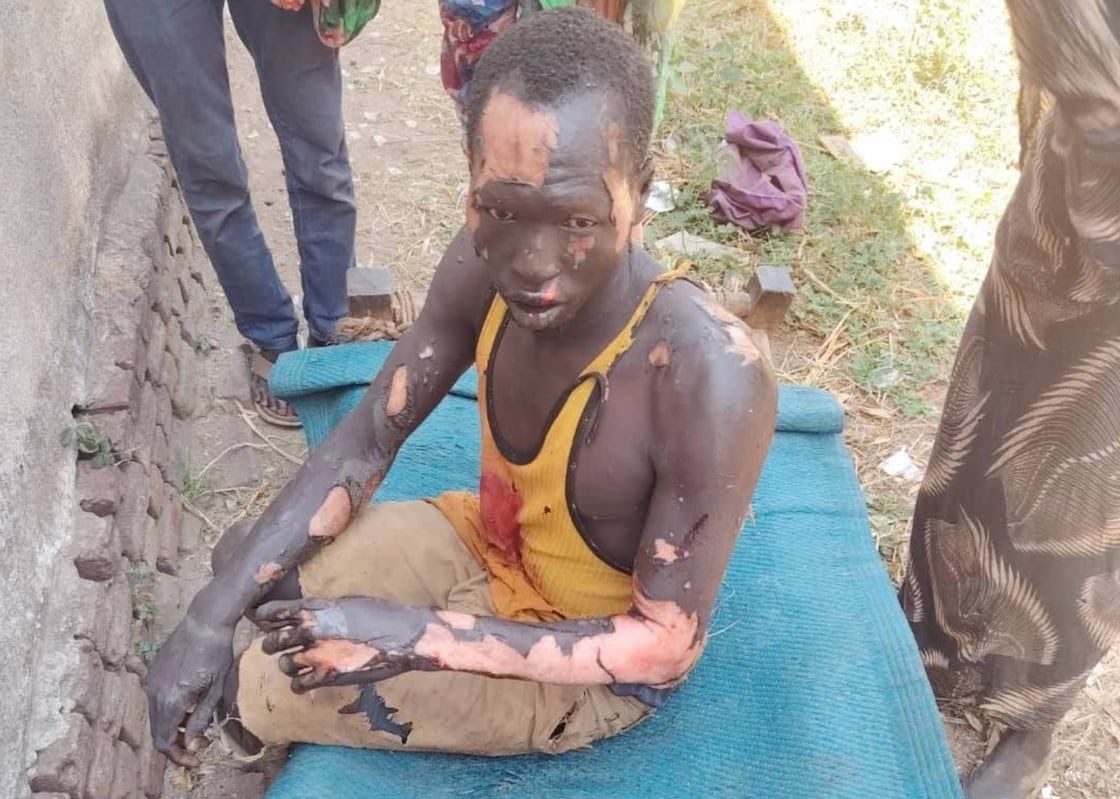
In Blue Nile, at least 40 civilians were reportedly killed in a drone strike on a displacement shelter in the Wad Al Mahi region on Friday.
Attributing the attack to the RSF, the Sudan Doctors Network (SDN) said a further 19 people had been injured, while the UN said most of the casualties were women and girls.
Pictures posted by the Emergency Lawyers showed people with horrific burns as well as what appeared to be the body of a child.
It follows a number of offensives over recent weeks, involving both drone strikes and ground attacks, that saw the RSF push north from areas it controls on the Ethiopian border towards Damazin, the Blue Nile state capital.
The state has seen repeated clashes since the start of the year amid apparent attempts by the RSF, with the allied Sudan People’s Liberation Movement-North (SPLM-N), to open its supply lines from Ethiopian territory.
In April, a report from the Yale Humanitarian Research Lab (HRL) concluded that the RSF was receiving logistical support at an Ethiopian military base, while SAF has claimed that drones carrying out attacks on its territory were launched from inside Ethiopia.
Since 26 September, at least 13,800 people have been displaced from areas around Wad Al Mahi and the Ethiopian border, according to the International Organization for Migration (IOM).
In a statement, a spokesperson for the UN secretary-general, António Guterres, described the latest strike as “horrifying”.
The Sudanese Women Rights Action group said the repeated targeting of sites hosting internally displaced persons (IDPs) presented a “dangerous and growing threat to thousands of displaced people”.
“International actors must act now and call on the belligerents in Sudan to stop targeting IDP hosting areas and movement routes,” it said.
The SDN said a further strike on the Um Darfa Hospital, also in Wad Al Mahi, on Sunday knocked the site out of service and left two medical staff seriously injured.
In West Kordofan, a total of 17 civilians, including women and at least three children, were killed and eight others were injured in two separate drone strikes on the towns of Nahud and Ghubaish on Friday, according to the UN’s Office for the Coordination of Humanitarian Affairs.
“These were people who had already been forced from their homes by conflict, only to face further violence in places where they had sought safety,” it said.
“The increasing frequency of drone strikes across Sudan is deeply alarming, exposing civilians, including displaced families, to further death, injury and suffering. People fleeing violence must be able to find safety, not face further threats to their lives.”
*Names changed due to security concerns.
The weekly dispatch features the latest developments, first-hand testimony, footage, photos, stats and analysis on Sudan. We can connect you with voices from the ground, experts, and survivors of the war. Get in touch on +44 7514 796 678 or sudan@avaaz.org.
To get this briefing in your inbox each week, sign up here.
At least 15 people have reportedly been killed by strikes in West Kordofan amid an offensive that has seen the Sudanese Armed Forces (SAF) gain territory in the state for the first time in almost a year.

Food, water, and fuel shortages are pushing Blue Nile into a “humanitarian crisis”, aid workers have told Avaaz, amid an escalation in fighting that has displaced more than 20,000 people.


Avaaz Foundation
110 Golden Lane | London, England, EC1Y 0TG
1330 6th Avenue, Suite 23A | New York, NY 10019, USA